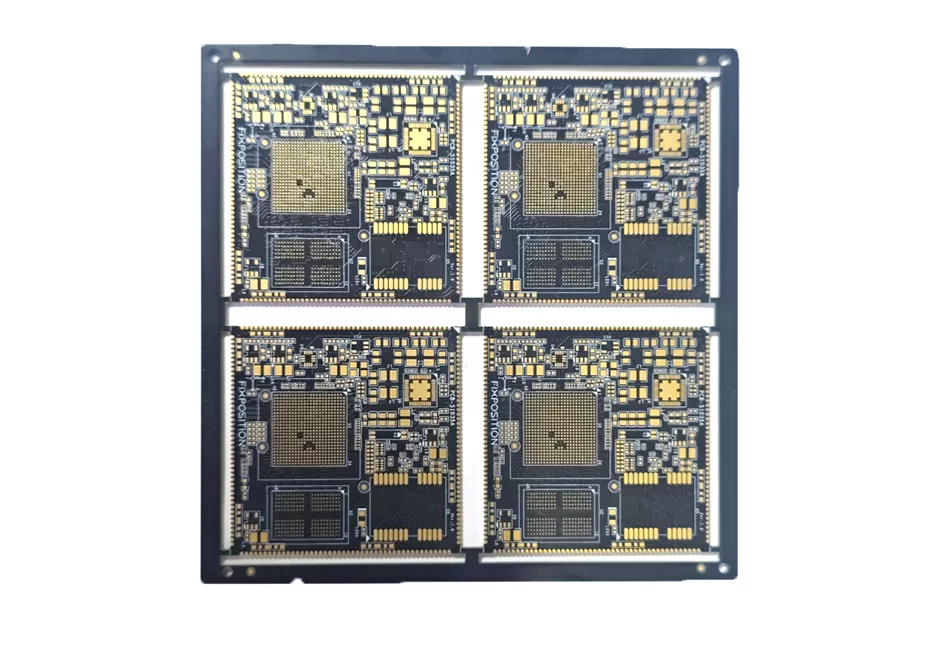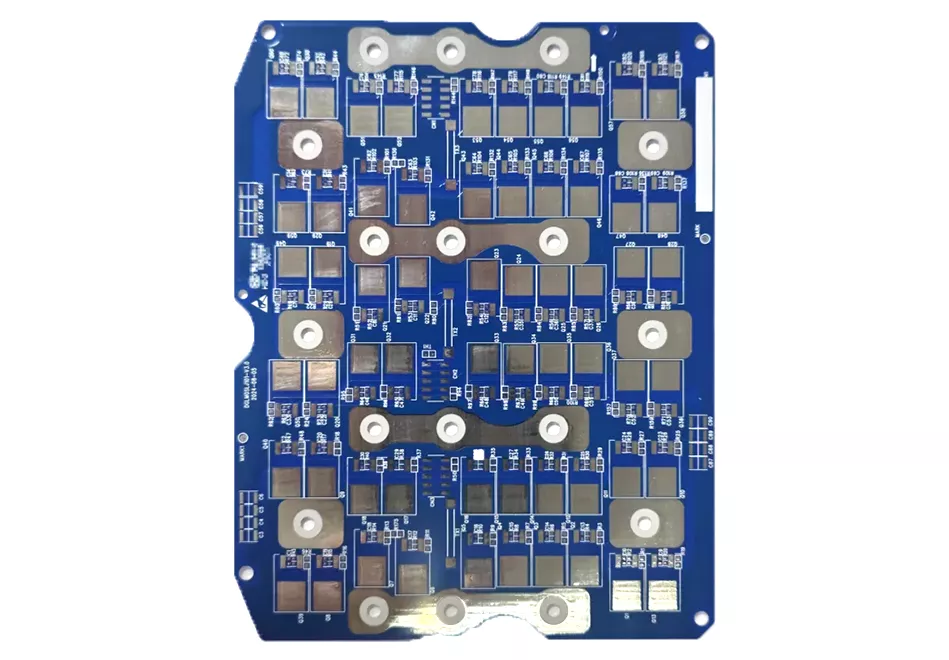



The same Gerber goes to three fabricators. The quotes come back at $4.20, $5.10 and $6.80 per board. Nobody is lying, and nobody is necessarily wrong. The three quotes are for three different products.
A PCB quote is a scope document disguised as a number. If the scope is not compared line by line, the cheapest quote often becomes the most expensive order.
The seven variables behind the gap
- Panel utilization. One shop arrays 20-up, another 14-up, because of rail width, panel size or routing method. Same board, different material consumption.
- Material brand. "FR-4" can mean a generic core or a named laminate with a datasheet. The price difference is real and so is the Dk spread.
- Finish. HASL versus ENIG is 1.0 versus 1.3–1.6 on the finish line. On a small board that is a large share of the total.
- Test. Flying probe, fixture, or none. A quote without test is not the same product.
- Tolerance class. Standard drill tolerance versus tight; standard outline versus routed with tight tolerance.
- NRE. One quote includes the stencil or fixture, another bills it later.
- Lead time. Standard queue versus a reserved fast lane.
A normalization table
| Line | Cheap quote | Expensive quote | Ask |
|---|---|---|---|
| Material | Generic FR-4 | Named laminate | Which grade and Tg? |
| Finish | HASL | ENIG | Which finish and thickness? |
| Test | None | Flying probe | 100% test or sample? |
| Panel | 14-up | 20-up | Panel size and array? |
| NRE | Excluded | Included | What is one-time? |
| Tolerance | Standard | Tight | Which class? |
| Lead time | 15 days | 7 days | Queue or fast lane? |
How to compare properly
Ask every supplier for the same four documents: stackup with material grade, finish specification, test method, and a line-item breakdown separating material, process, test and NRE.
Then compare the unit price at the same quantity, same finish, same test and same lead time. If one quote cannot be normalized, it cannot be compared.
A 40% gap usually collapses to 10–15% once the scope matches. The remaining difference is real: yield, registration capability, or service.
When the cheap quote is the right one
- The design is simple, tolerances are standard, and the end product is not safety-critical.
- The volume is low and flying probe is enough.
- The finish is HASL because the assembly is wave-soldered.
When it is not
- Fine pitch, impedance control, or press-fit: the cheap quote may not include the process capability you need.
- The quote excludes test or NRE; the final invoice will include them.
- The lead time is shorter than the material lead time; something has to give.
The number is the last thing to compare, not the first.
Send the same build package to us for a line-item quote, read how PCB quotes are calculated, or see how panelization changes unit price.