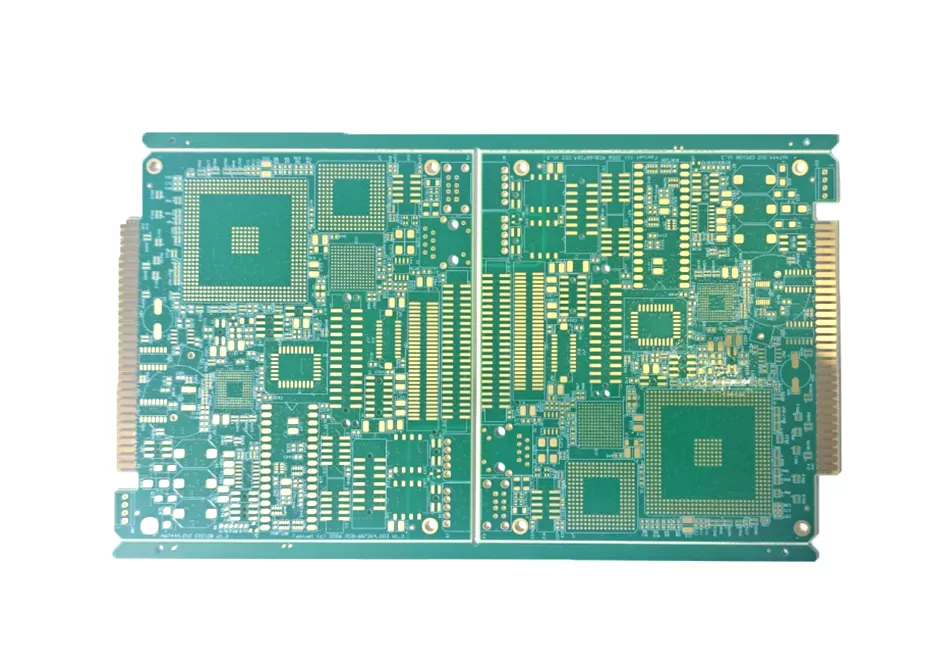


A buyer sends a 2.54 mm pitch power board for quote with "ENIG" on the drawing. The board is wave-soldered, ships in three weeks, and sits in a cabinet for a decade. ENIG adds roughly 15–25% to the fabrication price and buys nothing the product needs.
The same buyer sends a 0.4 mm pitch control board with HASL to save money, and the assembler spends a shift clearing bridges.
Surface finish is usually chosen by habit, not by the three things that actually decide it: the assembly process, the finest feature, and how long the board sits before it is used.
What the finish has to do
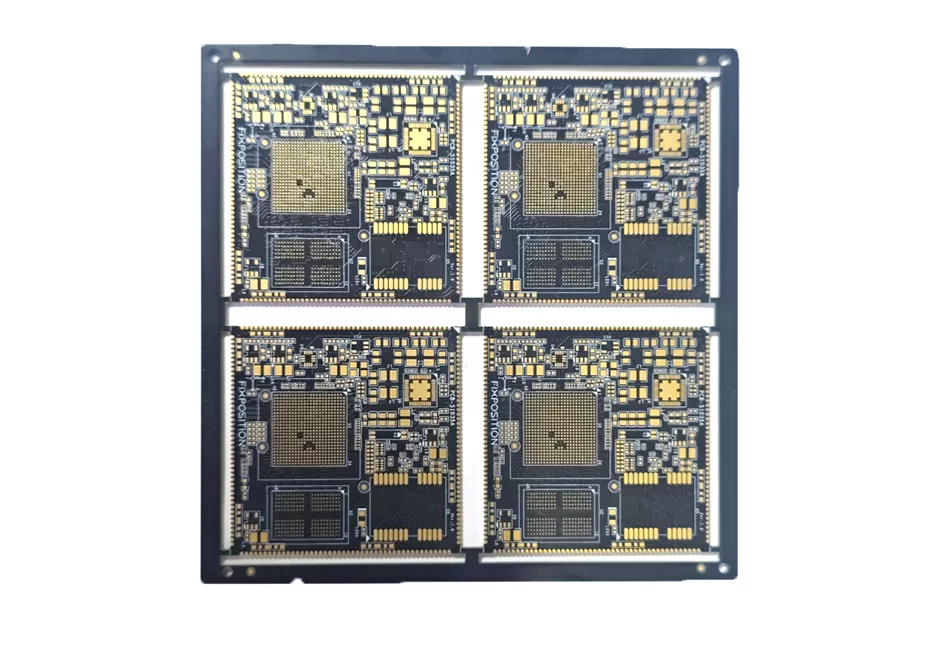
A finish protects the copper until soldering, provides a solderable surface, and — only sometimes — provides a contact or bonding surface. Those are different jobs:
- Solderability depends on the assembly process and the number of reflow cycles.
- Shelf life depends on how the finish ages in storage.
- Contact resistance and wear matter for edge connectors and test points.
- Bonding matters for wire bonding and die attach.
A finish that is excellent for one job can be wrong for another. Hard gold is the best wear surface and a poor solder surface. ENIG is a good solder and aluminum-wire surface and a poor wear surface.
The cost spread
| Finish | Typical thickness | Relative cost | Best for | Main risk |
|---|---|---|---|---|
| HASL (lead-free) | 1–2 µm | 1.0 | Through-hole, coarse SMT | Bridging at fine pitch, thermal shock |
| OSP | 0.2–0.5 µm | 1.1–1.2 | Short-life SMT, fine pitch | Expires, sensitive to handling |
| ENIG | Ni 3–6 µm, Au 0.05–0.1 µm | 1.3–1.6 | Fine pitch, long shelf, press-fit | Black pad, brittle joint |
| Immersion silver | 0.1–0.3 µm | 1.2–1.4 | Fine pitch, high frequency | Tarnish, handling |
| Immersion tin | 0.8–1.2 µm | 1.2–1.4 | Press-fit, fine pitch | Whiskers, shelf life |
| ENEPIG | Ni/Pd/Au | 1.8–2.5 | Wire bonding, mixed | Cost, process control |
| Hard gold | Ni 3–5 µm, Au 0.3–0.5 µm | 2–3 | Edge connectors, wear | Solderability, cost |
The multipliers are indicative and move with panel size and quantity. The point is the spread: the finish can be a larger share of the price than the laminate on a small board.
When ENIG earns its price
ENIG is the right default in four situations:
- Fine pitch below 0.5 mm. HASL leaves uneven mounds that bridge. ENIG is planar.
- Long shelf life. ENIG does not oxidize like OSP or tarnish like silver; a board can sit for a year.
- Press-fit connectors. The flat surface and hardness matter for the pin.
- Aluminum wire bonding. ENIG is a common surface for Al wire; ENEPIG is used for gold wire.
If the board is wave-soldered, has 1.27 mm pitch and ships in a month, none of these apply.
When ENIG is a waste
- Coarse pitch, through-hole or wave solder.
- Short assembly window, boards consumed within weeks.
- Cost-sensitive consumer boards where 20% of fab price matters.
- Boards that will be conformally coated and never handled.
HASL is not a bad finish; it is a cheap, robust finish with a pitch limit. OSP is excellent for a single reflow and a short life. The mistake is paying for planarity you do not need, or saving on a finish that cannot survive the assembly.
The failure modes worth knowing
Black pad. ENIG with poor nickel control produces a black, brittle layer at the nickel-gold interface. The joint looks fine and fails in thermal cycling or drop. It is a process-control problem, not a reason to avoid ENIG entirely — but it is a reason to qualify the fabricator.
Brittle nickel-tin joints. Thick nickel and thin gold can produce joints that crack under stress. The gold thickness and the nickel bath matter.
HASL bridging. At 0.5 mm pitch, the solder mounds touch. The assembler can clear them, at a cost, or the board can be re-quoted with ENIG.
OSP expiry. OSP protects copper for a limited time and is sensitive to fingerprints and multiple reflows. A board stored over a year may need a bake or a re-clean.
Silver tarnish. Immersion silver tarnishes in sulfur-containing environments. It solders fine, but incoming inspection may reject it on appearance.
Tin whiskers. Immersion tin can grow whiskers; press-fit and fine-pitch users accept it with controls.
Choosing by scenario
- Wave-soldered power board, 2.54 mm pitch, 10-year life: HASL. ENIG adds cost and buys planarity you do not use.
- 0.4 mm pitch, two reflows, one year shelf: ENIG.
- 0.5 mm pitch, assembled next week, cost-sensitive: OSP, if the assembly window is controlled.
- Edge connector, repeated insertion: hard gold over nickel, not ENIG.
- Gold wire bonding: ENEPIG; ENIG is for aluminum wire.
- Press-fit backplane: immersion tin or ENIG, with controlled holes.
What to put on the drawing
- Finish type and thickness, including nickel underplate for gold.
- Areas that must be free of finish (test pads, press-fit holes).
- Solder mask clearance around gold fingers.
- Whether the finish applies to both sides.
- Shelf life requirement and packaging.
A drawing that says only "ENIG" leaves the thickness and the nickel to the fabricator. That is where the disputes start.
Three questions buyers ask
Is ENIG always better than HASL?
No. It is better for planarity, shelf life and fine pitch. It is worse for cost and brings black-pad risk if the process is not controlled.
Can I mix finishes on one board?
Yes. Hard gold on the edge connector and ENIG elsewhere is common. It adds process steps and cost, but it is often cheaper than hard gold everywhere.
Does the finish affect impedance?
Slightly, through skin depth at high frequency. The bigger effect is on solderability and contact resistance, not on impedance.
If you are unsure, send the stackup, the assembly process and the shelf-life requirement. The finish should follow from those three, not from the last project.
Send your board for a finish review, or read how PCB quotes are calculated and review our PCB fabrication service.