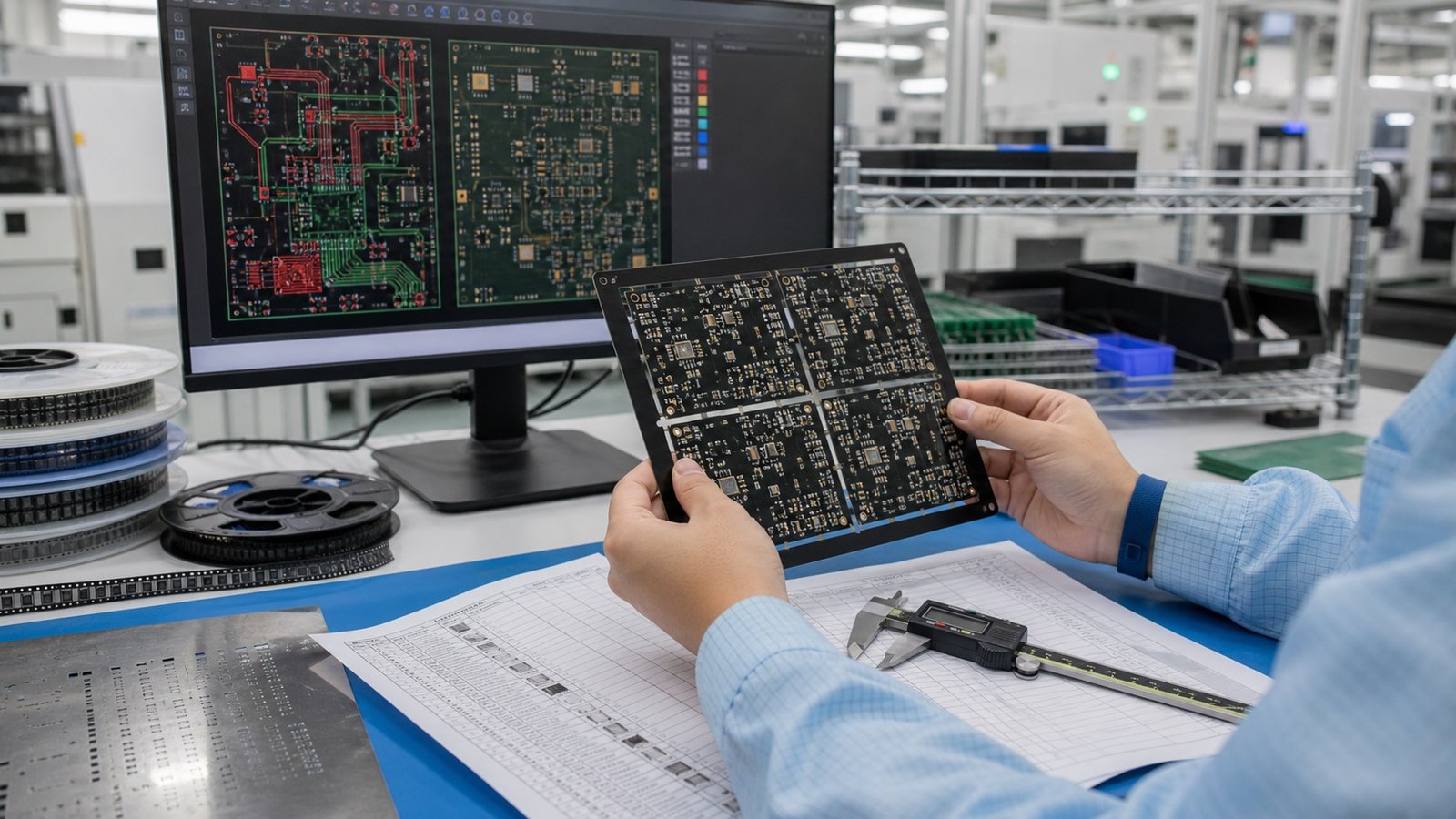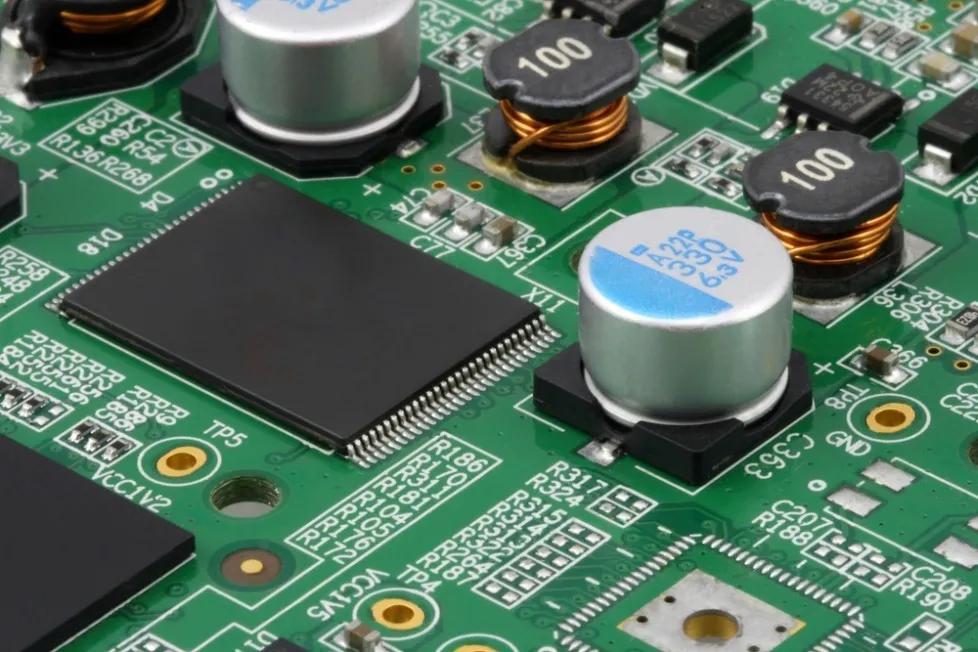



PCBA assembly cost cannot be calculated reliably from board dimensions and order quantity alone. A turnkey quotation may include bare PCB fabrication, component sourcing, solder paste stencil preparation, SMT and through-hole assembly, inspection, programming, functional testing, packaging and logistics. If two suppliers quote different scopes, their unit prices are not directly comparable.
This guide explains the information behind a professional PCBA quotation and shows engineering and purchasing teams how to request a price that reflects the actual production scope. It is intended for prototype, pilot-run and repeat-production projects, including boards that combine SMT, THT, BGA or other package types.
Build a Comparable Per-Board Budget
Start with the supplier's actual quoted figures. Let Q be the accepted order quantity, S the one-time engineering, stencil and fixture charges, and U the recurring per-board cost for the agreed PCB, components, assembly and testing. Keep separately quoted excess materials and logistics in E.
Total order budget = S + (Q × U) + E.
Effective per-board budget = U + (S + E) / Q.
| Illustrative order quantity | One-time setup allocation per board | What must stay comparable |
|---|---|---|
| 100 boards | S / 100 | Same released design, assembly and test scope. |
| 500 boards | S / 500 | Reconfirm material prices, availability, tooling and delivery for this quantity. |
If the same setup charge applies, its per-board allocation at 500 boards is one-fifth of the allocation at 100 boards. This arithmetic describes setup allocation only; the actual unit price must use the quote for each quantity. Check whether minimum-order components, unused reels, test development, packaging and freight are already included before adding them again.
Request the scope through our turnkey PCB assembly service. Use the RFQ template to obtain the input figures on a consistent basis.
What a Turnkey PCBA Quote Should Define
A turnkey PCBA supplier coordinates the unassembled PCB, electronic components and assembly process under one order. Depending on the project, the quotation may also include design-for-manufacturing review, component alternatives, inspection, firmware programming, test fixtures, conformal coating, cable or enclosure work and export packaging.
The first question is therefore not simply “What is the PCBA unit price?” It is “What work, materials and acceptance criteria are included in that price?” A useful quotation should identify assumptions, excluded items and one-time engineering or tooling charges separately from recurring production cost.
1. Bare PCB Specifications
The unassembled PCB is one part of the total PCBA cost. Layer count, finished thickness, board dimensions, base material, copper weight, minimum trace and spacing, hole structure, impedance control, surface finish and panelization all affect fabrication planning.
A standard two-layer FR-4 board and an HDI design with laser-drilled microvias do not require the same process route. Cost can also change when a design needs controlled-depth routing, edge plating, heavy copper, tight mechanical tolerances or a material that is not normally stocked. For dense designs, review the stack-up and microvia structure with an HDI PCB manufacturer before releasing the order.
Provide the complete Gerber or ODB++ data, NC drill files, fabrication drawing, stack-up requirements and any controlled-impedance information. If the data set is incomplete, the supplier may be able to give only a preliminary estimate.
2. BOM Cost, Availability and Approved Alternatives
For many turnkey projects, the bill of materials is the largest and most variable part of the quotation. Each line should identify the manufacturer part number, manufacturer, description, package, quantity per board and reference designators. Customer-supplied parts and do-not-populate positions should be marked clearly.
Availability matters as much as unit price. A component may be inexpensive in principle but unavailable in the required quantity or package. Obsolete parts, long lead-time devices, minimum order quantities, cut-tape charges and traceability requirements can change the sourcing plan. Any substitute that affects fit, function, firmware, compliance or product approval should be accepted by the customer before use.
Ask the supplier to separate confirmed parts from items that require an alternative, a longer purchasing window or customer consignment. This makes the quotation easier to audit and reduces the risk of an unapproved BOM change.
3. SMT, THT and Manual Assembly Complexity
Assembly cost depends on more than the number of components. The quotation should consider the number of placements, assembly sides, package mix, component pitch, board support, thermal mass and the amount of manual work.
- Fine-pitch QFP, QFN, LGA and BGA packages may require tighter process control and additional inspection.
- Double-sided assembly requires separate printing, placement and reflow planning for each side.
- Through-hole connectors, terminals, transformers and other large parts may require selective soldering or manual soldering.
- Press-fit parts, heat sinks, shields, wires and mechanical hardware add dedicated operations.
- Small or irregular boards may require rails, breakaway tabs or a production panel designed for assembly.
The centroid or pick-and-place file, assembly drawing and clear polarity or orientation information help the supplier estimate these operations accurately.

4. Engineering Review, Stencil and Production Setup
Prototype and low-volume orders carry setup work that cannot be evaluated only as a per-board charge. The supplier may need to review the land patterns, component-to-pad compatibility, polarity, panel design, stencil apertures, fiducials, tooling clearances and test access before production.
DFM, design-for-assembly and design-for-test checks are useful because fabrication, placement and test constraints interact. A change that simplifies PCB fabrication may create an assembly or test problem if the whole build is not reviewed together. One-time charges should be identified clearly so that buyers understand which items may not repeat on an unchanged reorder.
5. Inspection and Testing Scope
Inspection and testing should be specified before the quotation is approved. Visual inspection and automated optical inspection do not provide the same coverage as X-ray inspection, in-circuit testing or a customer-defined functional test. Hidden solder joints, programmed devices, power sequencing and product-specific interfaces may require different equipment and fixtures.
The buyer should define the acceptance criteria, test procedure, firmware version, power conditions, cables, fixture responsibilities and the records required with the shipment. IPC-A-610 provides acceptance criteria for electronic assemblies, but the applicable revision, class and customer-specific requirements still need to be agreed for the project.
A quotation should state whether fixture design, fixture fabrication, programming, test execution and failure analysis are included. “Functional testing” is not a complete scope unless the test inputs and expected results are defined.
6. Quantity, Build Stage and Repeat Orders
Prototype, pilot and repeat-production orders distribute setup cost differently. A prototype build prioritizes engineering validation and rapid feedback. A pilot run verifies the approved data, sourcing plan, assembly process and test method at a larger quantity. Repeat production depends on revision control, BOM stability and process consistency.
For a useful comparison, provide the quantity required now and the expected future batch pattern. Do not request an annual-volume price when the design, BOM or test method is still changing. A staged quotation can show the prototype scope first and identify which assumptions must be confirmed before repeat production.
7. Packaging, Documentation and Delivery
Packaging and delivery requirements can change the final cost even after manufacturing is complete. Confirm ESD packaging, moisture protection where applicable, individual or panel delivery, labels, serial numbers, barcodes, inspection reports, test records and shipping destination.
Lead time should be based on the complete critical path: engineering clarification, bare PCB fabrication, component availability, tooling, assembly, testing and final inspection. A requested delivery date is not a confirmed production commitment until the supplier has reviewed the actual files and material status.
PCBA Quote Checklist
| Cost area | What changes the quotation | Information to provide |
|---|---|---|
| Bare PCB | Material, layers, dimensions, copper, holes, stack-up, finish, impedance and panel design | Gerber or ODB++, drill data, fabrication drawing and stack-up |
| Components | Part availability, approved sources, quantity, package, substitutes and traceability | Complete BOM with manufacturer part numbers and reference designators |
| Assembly | Placements, sides, fine-pitch packages, BGA, THT, manual operations and hardware | Centroid file, assembly drawing and special process notes |
| Engineering and tooling | DFM review, panelization, stencil, fixtures and programming setup | Released design data, revision level and tooling responsibilities |
| Inspection and test | AOI, X-ray, ICT, functional test, programming and required records | Test procedure, acceptance criteria, firmware and fixture information |
| Delivery | Batch plan, packaging, labeling, documentation, destination and schedule | Current quantity, forecast, delivery target and shipping requirements |
For a document-by-document explanation, see our custom PCBA quotation checklist.
How to Compare Two PCBA Quotations
Start by normalizing the scope. Check whether both suppliers used the same PCB specifications, BOM revision, component brands, order quantity, assembly method, inspection plan, test coverage and delivery terms. Then separate recurring unit cost from stencil, fixture, programming and engineering charges.
A lower quotation is not necessarily lower cost if it excludes expensive components, test fixtures, X-ray inspection, programming, packaging or freight. Conversely, a higher prototype unit price may include setup work that will not repeat when the approved design moves into production. Ask for written clarification instead of assuming that a short description covers the same work.
Common Causes of a Revised PCBA Price
- The Gerber data and fabrication drawing specify different board parameters.
- The BOM is missing manufacturer part numbers, package details or quantities.
- A quoted component becomes unavailable before the order is released.
- The assembly drawing does not identify polarity, variants or do-not-populate locations.
- Functional testing is added after the initial quotation.
- The order quantity, panel design, delivery target or shipping terms change.
Revision control is the simplest way to reduce these problems. Send one released file package with consistent filenames and revision identifiers, and require written approval for any material or component change.
Frequently Asked Questions
Can I receive a PCBA estimate without complete files?
A preliminary estimate may be possible, but it should identify the assumptions used. A production quotation normally requires the PCB data, BOM, assembly information, quantity and test scope.
Why does a small prototype have a higher unit price?
Engineering review, stencil preparation, machine setup, material handling and test preparation are distributed across fewer boards. The exact effect depends on the design and the work included.
Is component sourcing included in every PCBA quote?
No. Confirm whether the quotation is turnkey, partially consigned or assembly-only. Customer-supplied components, excess purchasing quantities and unused material should be documented.
Does AOI replace functional testing?
No. AOI checks visible assembly conditions, while functional testing checks behavior defined by the test procedure. Coverage depends on the design, access and acceptance requirements.
How should approved alternatives be handled?
List pre-approved alternatives in the BOM or require written approval before substitution. Electrical, mechanical, firmware and compliance effects should be reviewed where relevant.
Request a Scope-Based PCBA Quotation
Shenzhen Benchuang Precision Electronics Co., Ltd. supports custom PCB fabrication and PCBA project review. To request a quotation, send the released PCB files, BOM, centroid file, assembly drawing, quantities, testing requirements and delivery destination through our PCB and PCBA inquiry page.
Technical scope note: This guide describes common PCBA quotation factors and does not replace a project-specific engineering review. Manufacturability, process capability, material and component availability, test coverage, price and lead time are confirmed only after review of the actual design files and order requirements.