

OEM and ODM PCBA projects differ mainly in design ownership, engineering responsibility and approval authority. In an OEM build-to-print project, the buyer supplies an approved design package and controls changes. In an ODM project, product requirements must first be converted into documented design, prototype and validation milestones.
The label alone does not define the scope. A useful quotation identifies who creates each file, who approves substitutions and engineering changes, which inspection and test evidence is required, and when the design becomes the controlled production baseline.
Shenzhen Benchuang Precision Electronics Co., Ltd. reviews OEM and ODM enquiries against the submitted project files. Available engineering, fabrication, sourcing, assembly and test scope is confirmed for each project rather than assumed from a generic capability list.
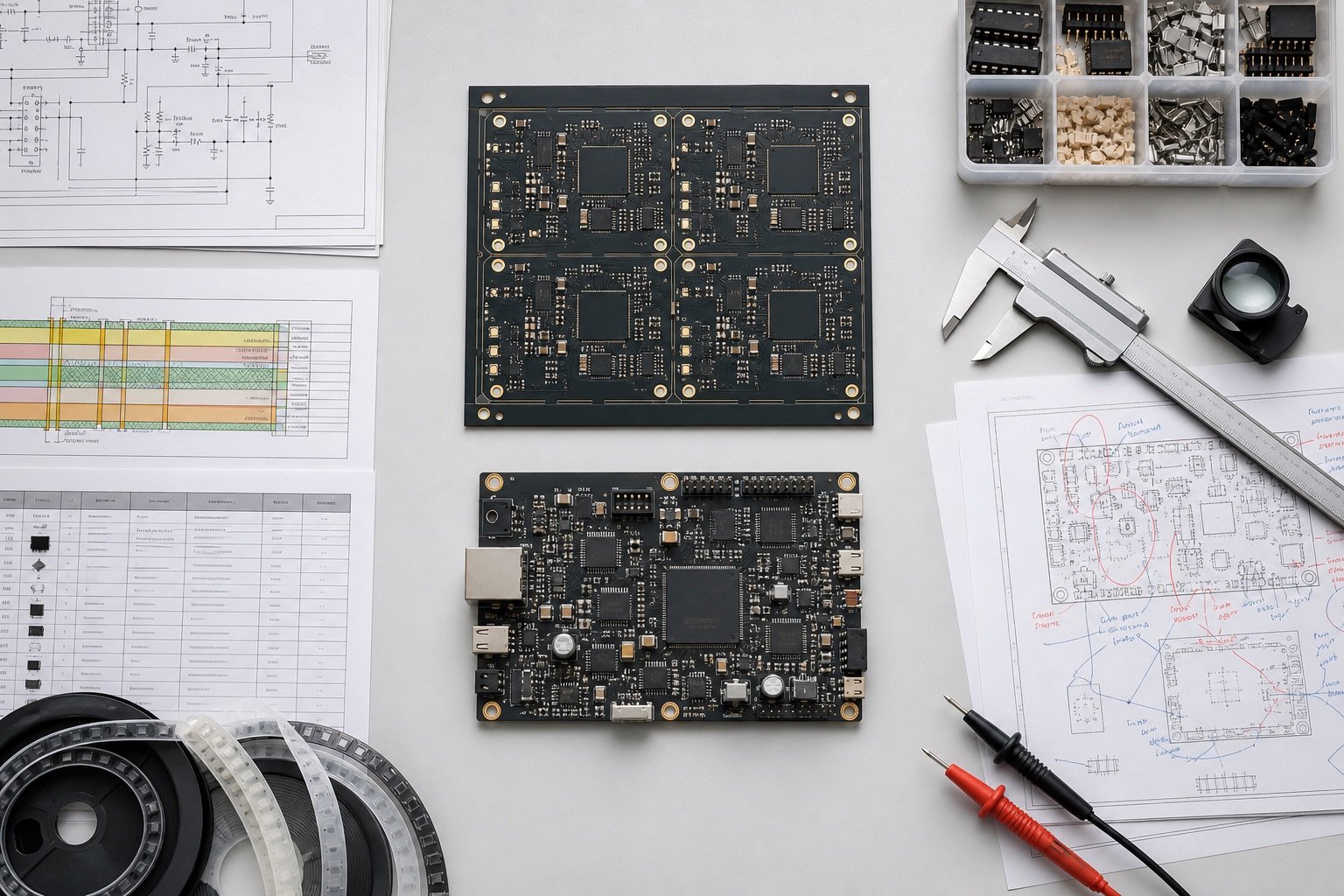
OEM vs ODM PCBA: Ownership and Approval Boundaries
| Decision area | OEM (build-to-print) | ODM (co-design) |
|---|---|---|
| Starting input | Buyer-approved fabrication, assembly, BOM and test data | Product requirements, interfaces, mechanical limits and validation targets |
| Design ownership | The buyer normally owns the design and approves manufacturing deviations | Ownership of schematics, layout, firmware, tooling and design outputs must be defined by contract |
| Engineering decisions | The supplier reports DFM, sourcing and test exceptions for buyer approval | Responsibilities, design reviews and milestone approvals are assigned before work starts |
| Quotation basis | Controlled revision, BOM, quantities, assembly scope and acceptance criteria | Engineering scope, prototype plan, design deliverables, validation work and production assumptions |
| Typical fit | Mature designs with controlled files and a defined test method | Products that still require documented architecture, design or validation work |
Choose the Model from the Current Project State
- Build-to-print OEM: use when the Gerber or ODB++ data, BOM, placement data, assembly drawings and test requirements are already controlled.
- Assisted OEM: use when the buyer owns the design but needs DFM, stack-up, sourcing or test-fixture input before release.
- ODM or co-design: use when requirements must still be converted into schematics, layout, firmware, prototypes or a validation plan.
Some suppliers use OEM and ODM as broad marketing terms. The quotation should instead state who prepares, reviews and approves every deliverable. That responsibility matrix is more useful than the label.
Minimum Input Package for an OEM PCBA RFQ
For build-to-print work, send one internally consistent revision of the manufacturing package. Where applicable, include:
- Gerber, ODB++ or IPC-2581 fabrication data, drill files and a readme
- Layer stack-up, material, copper, impedance and surface-finish requirements
- BOM with manufacturer part numbers, approved alternates and do-not-substitute parts
- Centroid or pick-and-place data and component orientation information
- Assembly drawings, special-process notes and mechanical files
- Inspection and test method, pass/fail criteria, fixture and software responsibility
- Prototype, pilot and repeat-batch quantities with the requested delivery date
An incomplete package may support a preliminary budget, but the quotation should list every assumption and missing file. Final production scope should be tied to the approved revision.
Minimum Input Package for an ODM PCBA RFQ
An ODM enquiry starts with product requirements rather than a finished production package. A useful requirements set includes:
- Product functions, external interfaces, power architecture and operating modes
- Mechanical envelope, connectors, controls, displays and enclosure constraints
- Operating environment and the standards or certification targets the product must address
- Performance, reliability and service-life targets with measurable acceptance criteria
- Expected prototype stages, review gates and responsibility for verification
- Design ownership, source-file delivery, licensing and reuse restrictions
- Target cost, forecast quantities and planned market or application
Do not treat an ODM request as a production-ready turnkey order until design ownership, deliverables, milestone approvals, validation responsibility and compliance work are defined in writing.
Require DFM, BOM and Revision-Control Evidence
- DFM report: each issue should reference the affected feature, describe the manufacturing risk, propose an action and identify the required approver.
- BOM review: record manufacturer part numbers, sourcing assumptions, lifecycle or availability concerns and parts that cannot be substituted.
- Revision baseline: fabrication, BOM, placement, assembly and test files should use one controlled revision identifier.
- Engineering change order: document the reason, affected files, approval, effective lot and disposition of existing material.
A component with the same footprint or a higher headline rating is not automatically an acceptable substitute. Electrical behavior, pin compatibility, firmware, thermal limits, qualification status and product compliance may all need review.
Define Inspection and Test Acceptance Before Quotation
Inspection and testing should be selected from the product risk and customer requirements. The quotation should identify which controls apply, what data will be returned and who supplies any fixtures, firmware or golden samples.
- Bare-PCB electrical test and dimensional or impedance evidence where specified
- Incoming component checks and moisture-sensitive handling where required
- Visual inspection, AOI or X-ray according to package and joint visibility
- ICT, flying-probe, boundary-scan or functional test when supported by the design and fixture
- Programming, serialization, label format and result-log requirements
- Acceptance thresholds, failure handling, retest rules and report format
A list of machines is not a test plan. The buyer and supplier need a written acceptance method that matches the approved revision and intended use.
Specify Traceability and Compliance as Deliverables
Traceability can refer to purchase source, manufacturer lot or date code, receiving record, material batch, process traveler, inspection result, serial number or shipment record. State exactly which links are required and how long records must be retained.
If RoHS, REACH, a quality-system certificate or another compliance document is required, request the current document and verify the named organization, issuing body, scope, sites, standard revision and validity period. A supplier declaration or process certificate does not by itself prove compliance of the finished customer product.
Quote Lead Time from Project Dependencies
A useful lead-time statement defines its start point and assumptions. The review should account for material availability, PCB construction, surface finish, quantity, component sourcing, fixture readiness, programming files, inspection scope and customer approval time.
- Separate engineering review, material procurement, fabrication, assembly, test and shipment.
- Identify long-lead or allocation-controlled components before order release.
- State which customer approvals stop the schedule and how changes reset the plan.
- Confirm any expedite option only after feasibility and material status are reviewed.
Evidence to Request Before Supplier Approval
- A quotation tied to the file revision, quantities, assumptions, exclusions and acceptance scope
- A representative DFM or exception-report format
- The BOM sourcing and substitution-approval workflow
- The proposed inspection and test plan with returned records
- A sample traveler or lot record if traceability is required
- Current, scoped certification or compliance documents where relevant
- Change-control and nonconformance procedures
- Written ownership terms for design files, tooling, firmware and test assets
How Benchuang Reviews OEM and ODM PCBA Enquiries
Shenzhen Benchuang Precision Electronics Co., Ltd. uses the submitted files to separate confirmed scope from open engineering, sourcing and test questions. For build-to-print enquiries, the review starts with revision consistency, PCB construction, BOM completeness, assembly data and acceptance criteria.
For co-design or ODM enquiries, the first review also covers product requirements, ownership of design outputs, milestone approvals and validation responsibility. Feasibility, documentation and available process scope are confirmed before order acceptance.
Use the PCBA quotation file checklist to prepare a production package, or review the PCB and PCBA service scope before sending an enquiry.
OEM and ODM PCBA FAQ
Can I request a quotation before every file is complete?
A preliminary budget may be possible if the available files and assumptions are stated. A production quotation needs a controlled design package, BOM, quantities, assembly scope and acceptance requirements.
Who approves component substitutions?
The buyer should approve substitutions unless a written agreement assigns that authority elsewhere. The review should cover electrical, mechanical, firmware, thermal, lifecycle and compliance effects, not only footprint and price.
Does via-in-pad affect quotation and schedule?
It can. Filled and capped via-in-pad structures add process and inspection steps. Feasibility, cost and schedule depend on via type, board construction, finish, quantity and acceptance requirements.
What should a pilot build prove before repeat orders?
The pilot should confirm the released files, approved BOM, assembly process, fixtures, programming, test limits, defect disposition and returned records. Open deviations should be closed or formally accepted before the next batch.
What is the fastest way to obtain a useful review?
Send one named revision with a complete BOM, placement data, assembly drawings, quantities and test acceptance. For ODM work, add the product requirements, ownership terms and validation milestones.
Request a File-Based OEM or ODM Review
Send the current project package through the contact page. The engineering team will return project-specific questions and identify the information needed to define the quotation and approval path.