


Los 10 principales fabricantes chinos de PCBA que ofrecen soluciones integrales para proyectos OEM.
Contents ▴
For engineering and sourcing teams, comparing China PCB assembly manufacturers is less about whether a supplier can place components and more about who controls the complete production risk. The important differences are usually found in PCB process ownership, BOM sourcing authority, deviation control, test responsibility, material traceability and the transfer from NPI to repeat production.
This guide compares 10 printed circuit board assembly manufacturers from an OEM buyer's perspective. It distinguishes online platforms from project-managed suppliers and shows what should be verified before a supplier enters an approved vendor list. Even when companies use the same turnkey PCB assembly services language, the actual commercial and technical scope may differ. Each candidate must therefore be evaluated against the same technical package, sourcing rules, acceptance criteria, production quantities and documentation requirements.
Quick Comparison of 10 China PCB Assembly Manufacturers
| Manufacturer | Useful Starting Point For | Services to Review | Buyer Should Confirm |
|---|---|---|---|
| Benchuang PCBA | OEM projects where HDI or high-layer-count PCB fabrication is central to the assembly | PCB engineering review, PCB fabrication, component sourcing and assembly coordination | Assembly, inspection and functional-test scope for the specific product |
| PCBWay | Prototypes, engineering builds and flexible online ordering | PCB fabrication, turnkey assembly, sourcing and testing options | Approved BOM sources, substitutions and production-level controls |
| NextPCB | Fast-turn development and teams that value online DFM tools | DFM review, PCB fabrication, assembly and component sourcing | Transition plan from prototype to repeat production |
| JLCPCB | Standardized prototypes and small-to-medium online orders | PCB fabrication, in-stock component sourcing, SMT and through-hole options | Parts outside the platform library and custom test requirements |
| LZJPCB | Custom OEM work requiring a conventional one-stop project workflow | PCB fabrication, assembly, sourcing and engineering support | Current line capacity, certification applicability and test documentation |
| PCBCart | High-mix, low-to-medium-volume and more complex electronics projects | PCB fabrication, assembly, sourcing, testing and box build | NPI ownership, traceability and repeat-order change control |
| PCBasic | Projects requiring design, fabrication and assembly services in one supply chain | PCB design, fabrication, BOM sourcing, SMT, THT and testing | Which services are performed in-house for the quoted order |
| FS Technology | Turnkey, partial-turnkey and consigned OEM assembly models | Sourcing, assembly, testing and box-build support | Material responsibility and acceptance criteria by service model |
| Hitech Circuits | Mixed PCB and electronics manufacturing requirements | PCB fabrication, PCBA, sourcing, testing and box build | Process route and quality records for the selected factory |
| Unit Circuits | Small and medium OEM teams seeking integrated assembly support | PCB fabrication, sourcing, SMT, THT, testing and box build | MOQ, test-fixture ownership and scale-up planning |
10 China PCB Assembly Manufacturers for OEM Projects
1. Benchuang PCBA
Benchuang is relevant to OEM projects in which a technically demanding bare PCB must be coordinated closely with assembly. Founded in 2007, Meizhou Benchuang Electronics focuses on high-end HDI and high-layer-count boards for communications, automotive electronics, aerospace, intelligent terminals, IoT, industrial control and security applications.
For an OEM buyer, the relevant advantage is the ability to begin with the PCB structure instead of treating the board as a standard assembly input. Designs involving blind or buried vias, via-in-pad, back drilling, controlled impedance, fine features or multilayer stack-up decisions may benefit from early engineering review. Buyers can review Benchuang as a China PCB manufacturer and turnkey PCBA supplier, together with its HDI PCB manufacturing y Fabricación de PCB multicapa pages.
Buyer check: Send the Gerber data, stack-up, BOM, pick-and-place file and test requirements together. Confirm which assembly, inspection, programming and functional-test operations are included in the actual quotation rather than assuming every PCBA service is standard.
2. PCBWay
PCBWay is a familiar option for development teams that want online quoting, PCB fabrication and assembly within one ordering environment. Its service range covers prototype and production boards, component sourcing, SMT and mixed assembly, and several inspection or testing options. This can make it convenient for teams comparing quick turn PCB assembly during early design iterations.
The platform-style workflow is useful, but an OEM buyer should still define approved manufacturers, acceptable distributors, substitute-part rules and traceability requirements. Prototype convenience does not automatically establish the process controls required for stable volume production.
Buyer check: Confirm whether your BOM will use customer-approved sourcing channels, how alternates are authorized and which inspection or test records will be supplied with the batch.
3. NextPCB
NextPCB combines PCB fabrication, assembly and component sourcing with online engineering tools. It is a practical candidate for startups, R&D teams and established OEMs that want early manufacturability feedback before committing to a build. Its service scope includes prototype and production PCB options, DFM support and turnkey PCBA workflows.
When moving beyond an engineering build, buyers should ask how the prototype process transfers into repeat production. The approved stack-up, component substitutions, stencil revisions, test method and engineering change history should remain controlled as order volume increases.
Buyer check: Request a written prototype-to-production plan covering file revision control, golden-sample approval, sourcing continuity and production test coverage.
4. JLCPCB
JLCPCB is suited to engineers who value a highly standardized online ordering process and a broad in-stock component catalogue. The platform integrates PCB fabrication, component selection and assembly, which can reduce quotation friction for prototypes and standard small-to-medium builds. It also supports both surface-mount and through-hole requirements within defined service rules.
The main sourcing question is whether the project fits the available parts and process options. Custom components, nominated distributors, specialized programming, nonstandard inspection or product-specific functional testing may require additional coordination outside the default workflow.
Buyer check: Validate the complete BOM against the available component library before finalizing the design, and document any customer-supplied parts or special test steps separately.
5. LZJPCB
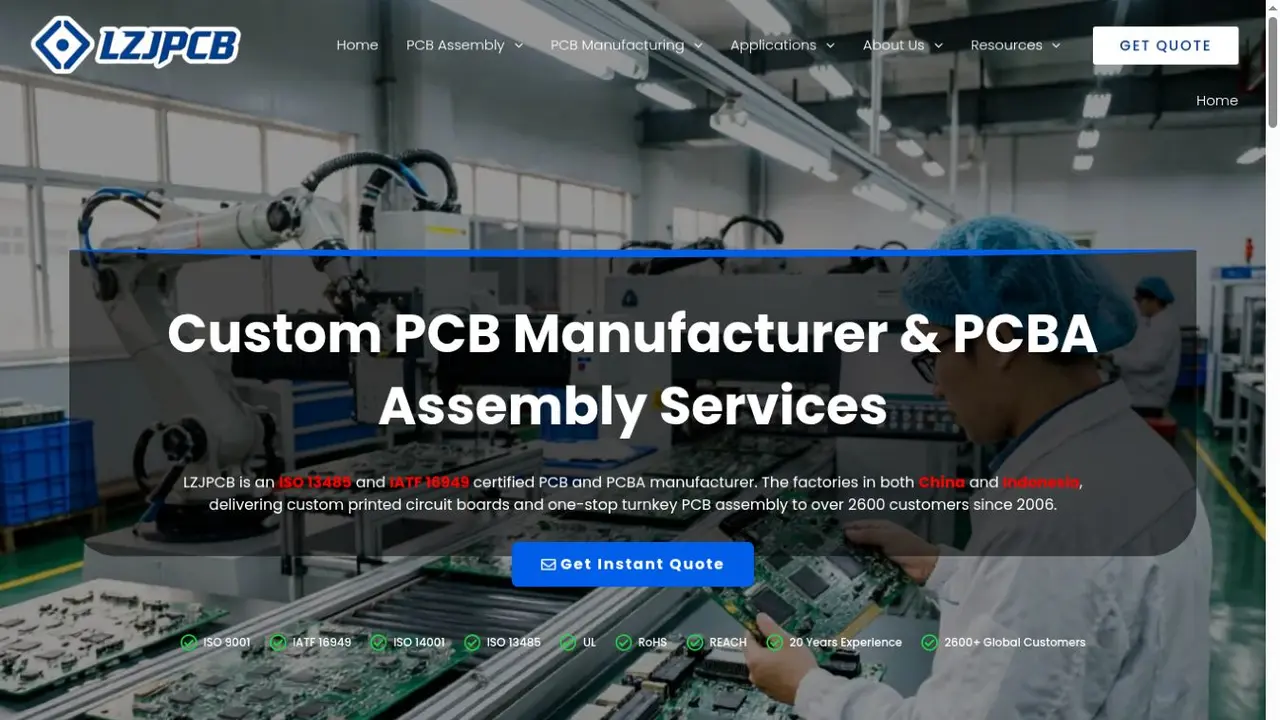
LZJPCB presents a conventional one-stop model covering PCB manufacturing and PCBA services for custom projects. This type of supplier may be useful to OEM buyers who prefer a project-managed quotation instead of relying entirely on a self-service ordering platform. Its listed services include PCB fabrication, component sourcing and turnkey assembly support.
Because the suitability of a conventional supplier depends heavily on the assigned production route, buyers should request project-specific documentation rather than relying on a general capability page. The quotation should identify the manufacturing site, inspection plan, applicable certificates and responsibility for sourced components.
Buyer check: Confirm the actual factory and line assigned to the order, the certificate scope applicable to that site, and the inspection or test documents delivered with each batch.
6. PCBCart
PCBCart positions its electronics manufacturing services around higher-complexity, higher-precision and mixed-volume work. Its service scope includes PCB fabrication, assembly, component sourcing, testing and box-build support. That combination may suit OEM buyers comparing low volume PCB assembly for products requiring more engineering coordination than a standard prototype order.
For high-mix, low-to-medium-volume production, quotation quality depends on how NPI tasks and repeat-order changes are controlled. Buyers should identify who owns DFM questions, fixture development, test software, approved deviations and component lifecycle communication.
Buyer check: Ask for an NPI responsibility matrix and sample batch records showing material traceability, inspection status, test results and revision identification.
7. PCBasic
PCBasic offers a broad workflow that can include PCB design, board fabrication, component sourcing, SMT, through-hole assembly and testing. It may appeal to OEM teams that want one supplier to coordinate several technical stages, particularly when internal manufacturing resources are limited.
A broad service menu should be converted into a precise statement of work. Ask which stages are performed by the quoted manufacturing site, which are supported by partners, and who carries responsibility for quality issues at each handoff. This is especially important when design services, cable work or final product integration are added to the PCB assembly scope.
Buyer check: Require the quotation to separate PCB fabrication, component sourcing, assembly, testing, tooling and any subcontracted operations so cost and responsibility remain clear.
8. FS Technology
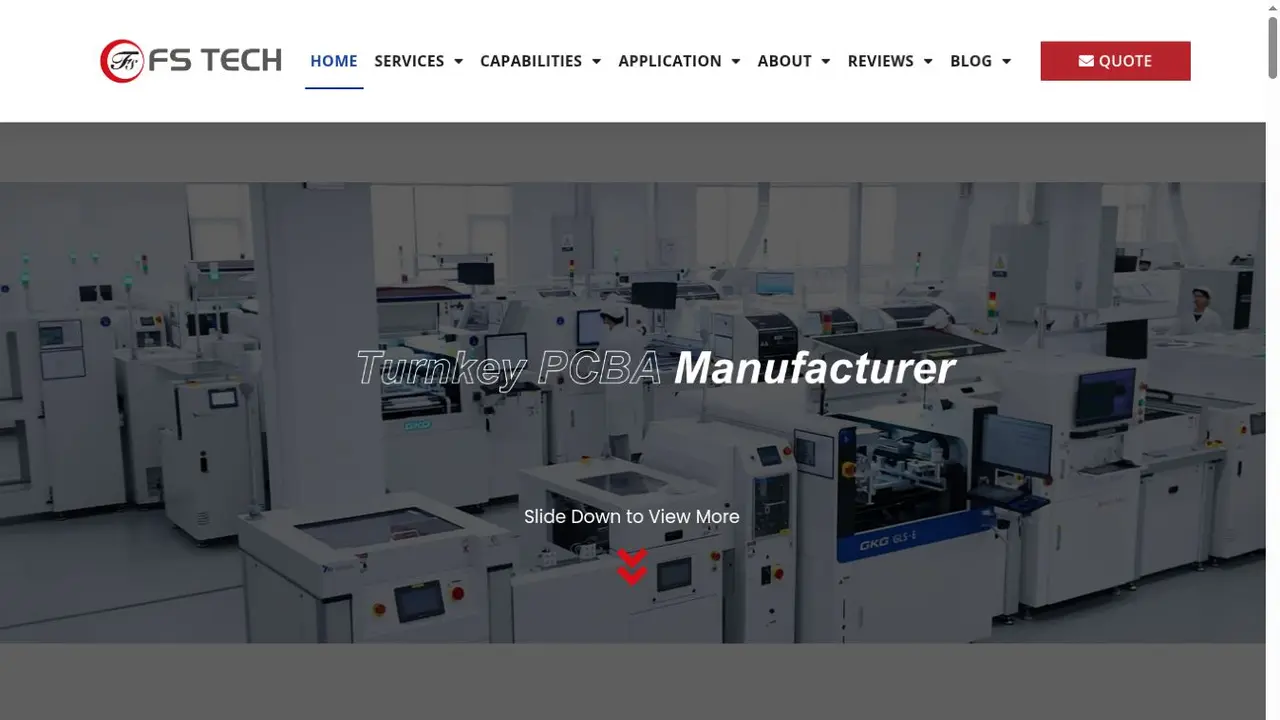
FS Technology describes full turnkey PCB assembly, partial-turnkey and consigned assembly models. This flexibility can be useful when an OEM wants the supplier to purchase the entire BOM, plans to consign controlled components, or needs a mixed arrangement because of allocation, security or customer-approved vendor requirements.
The service model changes commercial and quality responsibility. A full-turnkey order places more sourcing responsibility on the supplier, while a consigned model requires agreement on incoming inspection, shortages, moisture-sensitive handling and liability for customer-supplied materials.
Buyer check: Mark every BOM line as supplier-sourced, customer-supplied or approved-alternate eligible, and agree how shortages, damaged consigned parts and excess inventory will be handled.
9. Hitech Circuits
Hitech Circuits covers PCB fabrication, PCB assembly, component sourcing, testing and box-build-related services. It is therefore a candidate for OEM projects comparing box-build and PCB assembly services rather than a bare-board-only supplier.
When several services are combined, the supplier should provide one controlled production route. Buyers should confirm the site responsible for each operation, the applicable process standards and the records that connect a finished unit to the PCB lot, component lots, assembly date and test result.
Buyer check: Request a sample traveller or traceability record and confirm whether box-build, cable assembly, programming and functional testing are included or quoted separately.
10. Unit Circuits
Unit Circuits presents an integrated service range including PCB fabrication, component sourcing, SMT and through-hole assembly, testing and box build. This can be attractive to smaller OEM teams that want a single project contact and do not want to coordinate separate vendors for every manufacturing step.
The key issue is scalability. A supplier that supports prototypes should also explain how line setup, component purchasing, fixtures, acceptance limits and capacity planning will change for pilot and repeat-production quantities.
Buyer check: Quote the same project at prototype, pilot and expected production quantities, and compare the proposed process, tooling, test coverage and material purchasing assumptions at each stage.
How to Compare Printed Circuit Board Assembly Manufacturers
A useful comparison of PCB assembly manufacturers uses the same controlled RFQ package and the same commercial boundary for every candidate. Otherwise, a lower quotation may simply exclude approved-source purchasing, attrition, test fixtures, programming, documentation, NRE or excess material. For contract manufacturing PCB assembly, commercial responsibility must be as clear as the technical scope.
| Comparison Area | Information to Request | Por qué es importante |
|---|---|---|
| Fabricación de PCB | Stack-up, material, layer count, copper, impedance, via structure, surface finish and panel rules | Confirms that the bare board process matches the design instead of being outsourced without visibility |
| Abastecimiento de componentes | Approved sources, alternates, date-code rules, traceability, counterfeit controls and lifecycle review | Component cost and availability often create more project risk than SMT placement |
| Assembly process | SMT, THT, BGA, fine-pitch, press-fit, selective soldering, coating and rework limits | Defines whether the quoted route fits the component mix and reliability requirement |
| Inspection and testing | SPI, AOI, X-ray, electrical test, ICT, programming, functional test and reports | Prevents different suppliers from quoting different quality scopes |
| Quality system | Applicable certificates, site scope, incoming control, process records and nonconformance handling | A certificate is useful only when it covers the relevant organization and process |
| Engineering control | DFM/DFA process, EQ handling, deviation approval, ECN control and golden-sample rules | Protects the approved product definition across repeat orders |
| Production fit | Prototype, pilot and volume capability; line allocation; capacity and continuity plan | A good prototype supplier is not automatically the best volume supplier |
| Commercial clarity | Tooling, fixtures, freight, excess material, NRE, payment terms and warranty response | Makes quotations comparable and reduces later cost disputes |
For a consistent RFQ, prepare Gerber and drill files, the BOM, centroid data, assembly drawings, the quantity forecast and a written test specification. Benchuang's lista de archivos para solicitar una cotización PCBA personalizada provides a more detailed file-by-file reference.
Use Stage-Gate Qualification, Not a Price-Only Shortlist
- Gate 1 - Process fit. Eliminate suppliers that cannot confirm the proposed PCB stack-up, assembly route, package mix, inspection plan or required product controls against the actual design.
- Gate 2 - Commercial normalization. Rebuild each quotation into the same cost structure: PCB, components, attrition, stencil, fixtures, programming, testing, NRE, excess material, packaging and freight.
- Gate 3 - Engineering response. Compare the quality of DFM/DFA questions, sourcing risk identification, approved-alternate handling and proposed test coverage. A fast quotation with few technical questions is not automatically a stronger response.
- Gate 4 - Controlled pilot. Freeze the revision, approved BOM, workmanship criteria, test limits and deviation authority before the build. Review first-article results and all open issues before accepting the lot.
- Gate 5 - Production readiness. Confirm line assignment, tooling ownership, material purchasing windows, capacity, operator instructions, traceability and ECN implementation before volume release.
- Gate 6 - Early production monitoring. Track yield, defect Pareto, rework, component changes, test escapes and delivery performance across the first repeat lots before granting long-term status.
There is no single PCB assembly contract manufacturer that is right for every OEM project. The suitable choice is the manufacturer whose PCB process, sourcing model, assembly capability, quality controls and communication method match the product's real risk profile.
Preguntas frecuentes
How can quotations from different PCB assembly manufacturers be normalized?
Require every supplier to quote the same frozen data package, quantities, Incoterm, sourcing policy, test scope and documentation set. Separate recurring unit cost from NRE, tooling, fixtures, programming, freight and excess material. Confirm whether component pricing includes attrition, minimum order quantities, price breaks and liability for obsolete or unused stock. A turnkey PCB assembly quotation is comparable only when exclusions and assumptions are visible.
What evidence should be reviewed before approving a pilot build?
Review the proposed stack-up, DFM/DFA output, approved sourcing channels, process flow, inspection plan, control plan, traceability method and test proposal. For higher-risk products, also review sample quality records, calibration status, first-article format, nonconformance workflow and the certificate scope of the site that will manufacture the order.
How should component sourcing responsibility be controlled?
Classify every BOM line as approved-source only, approved-alternate eligible or customer-consigned. Define who can authorize substitutions, which distributor records must be retained, how date-code or lifecycle restrictions are handled and who owns excess or obsolete inventory. The PCB assembly supplier should not replace a controlled component based only on package and nominal specification.
Which quality records matter most when qualifying a supplier?
Prioritize records that connect the shipped assembly to its actual production history: PCB lot, component lots, solder paste or process batch, line and date, inspection status, test result, deviation approval and final release. Equipment lists and general certificates are useful context, but project-specific traceability, yield data and closed nonconformance records are more useful for supplier approval.
What must remain controlled when moving from prototype to production?
The released revision, stack-up, approved BOM, sourcing channels, stencil data, programming files, test limits, workmanship criteria and approved deviations must transfer into the production route. If the line, tooling, panelization, soldering process or test method changes, the supplier should identify the change and define whether renewed first-article approval is required.
When is an online platform or a project-managed supplier more suitable?
An online platform can be efficient for standardized prototypes, accessible component libraries and fast transactional ordering. A project-managed supplier is usually more suitable when the PCB is complex, sourcing is controlled, test development is substantial, documentation is customer-specific or the product will move into repeat production. The decision should follow project risk rather than company size or quoted lead time alone.
Ready to compare a project against Benchuang's PCB and PCBA workflow? Prepare your Gerber files, BOM, assembly data, quantities and testing requirements, then request an engineering review and quotation.